Rectified vs non-rectified tile: joint size and clips
Short answer
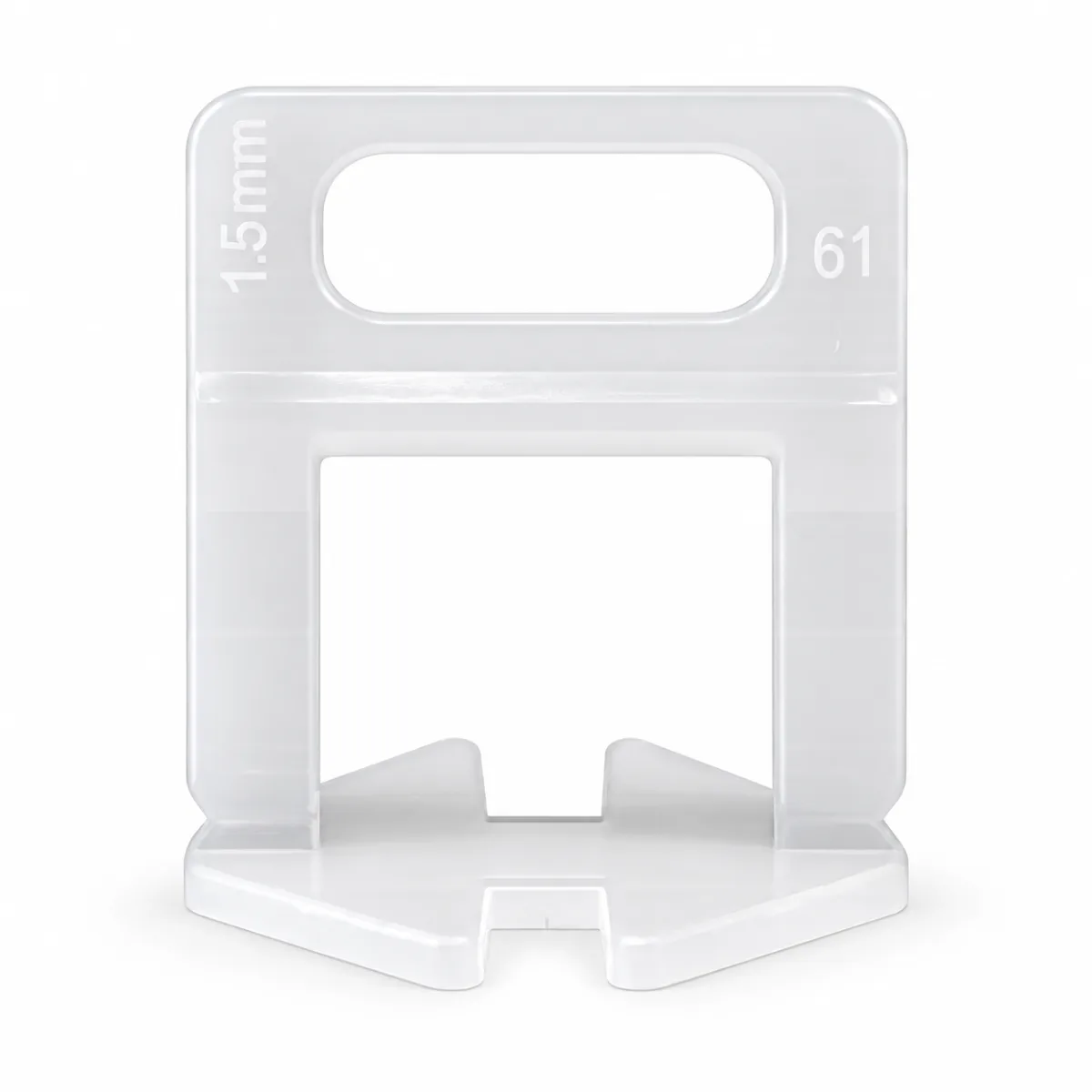
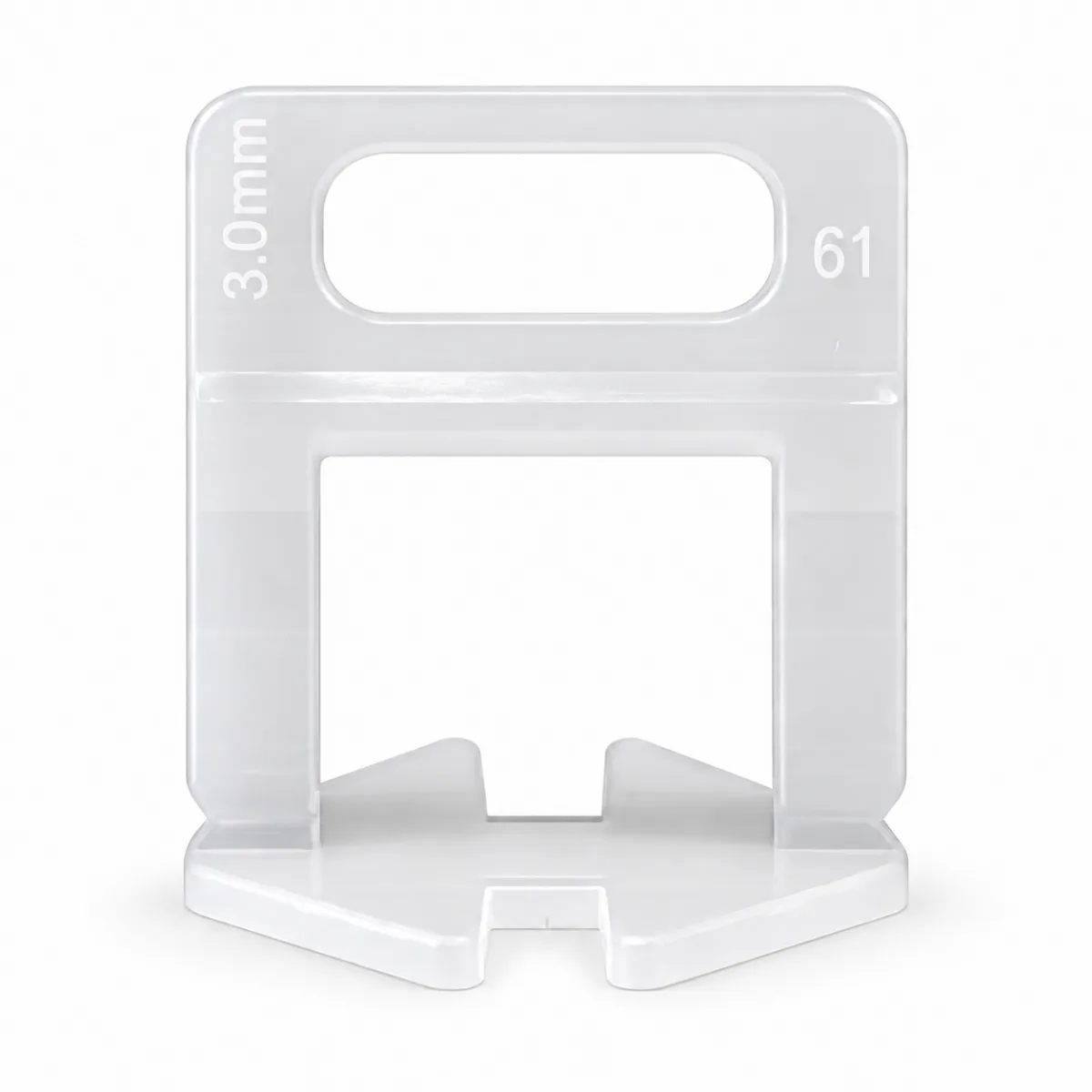
Rectified tile is cut or ground after firing so every piece is the same size with sharp, square edges, which lets it take a narrow joint, usually 1/16" (a 1.5 mm clip) or a little wider (2.0 mm). Non-rectified, pressed-edge tile keeps its soft, rounded factory edge and varies more in size, so it needs a wider joint, usually 1/8" or more (a 3.0 mm clip). The installation standard asks for a joint at least three times the tile's actual size variation, never less than 1/16".
Rectified vs pressed-edge at a glance
| Rectified | Pressed-edge (non-rectified) | |
|---|---|---|
| Edges | Ground flat and square | Soft, slightly rounded |
| Size variation | Very small | Larger, piece to piece |
| Typical joint | 1/16" to a little wider | 1/8" or more |
| Clip | 1.5 mm or 2.0 mm | 3.0 mm |
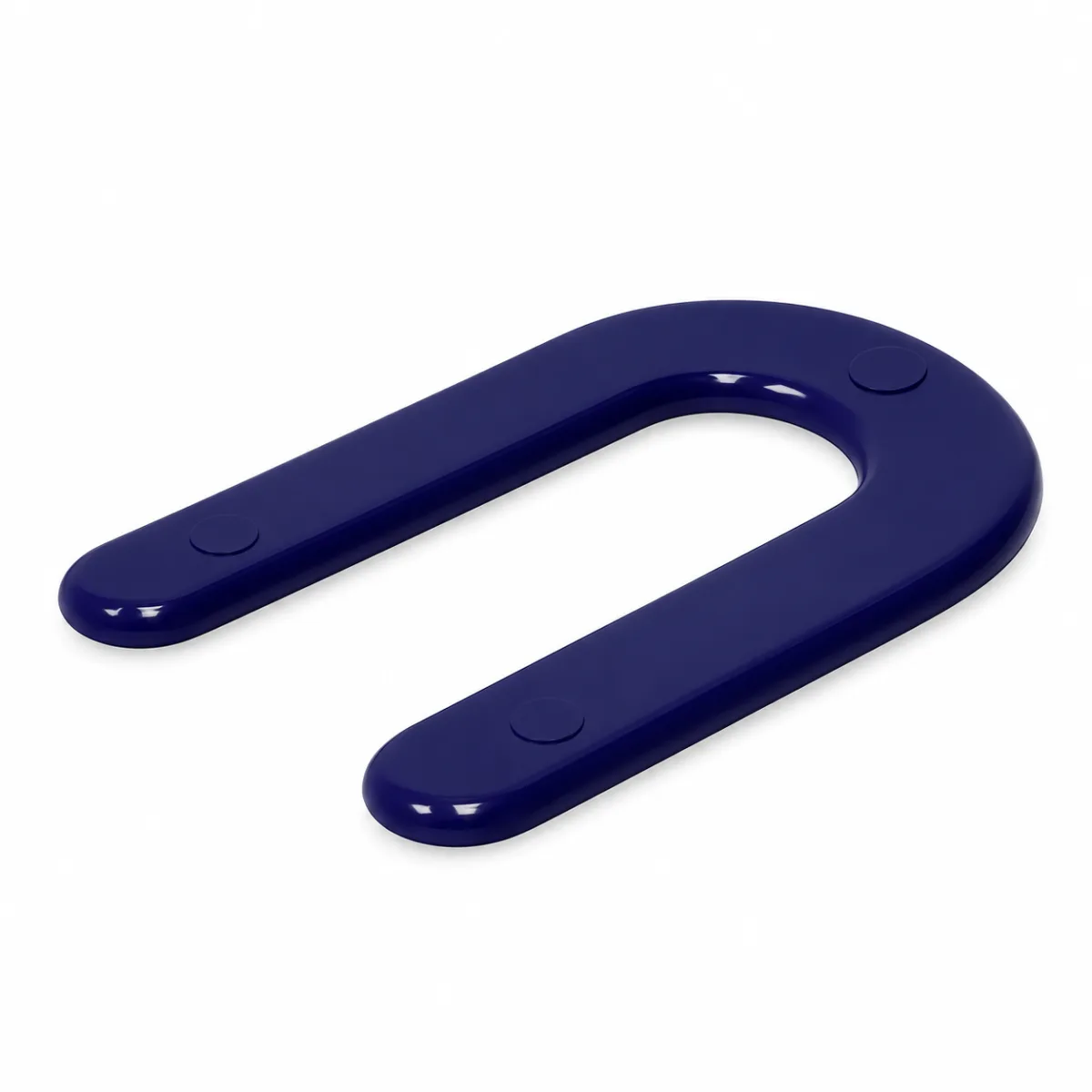
| Spacer at walls | 1/16" U spacer | 1/8" U spacer |
How to tell which you have
- Check the box or spec sheet for "rectified".
- Run a finger along the edge: rectified feels sharp and square; pressed-edge feels rounded.
- Measure a few tiles. If they differ by more than a hair, treat the tile as pressed-edge and widen the joint.
- Whatever the type, the tile maker's minimum joint wins.
Frequently asked questions
Can rectified tile be laid with no grout joint?
No. Every tile needs a joint for movement and size variation; the usual minimum is 1/16".
What joint should I use for non-rectified tile?
Usually 1/8" or wider, and at least three times the size variation between tiles.
Do I need leveling clips for rectified tile?
On tile 8" and up they're strongly recommended. Tight joints make any lippage easier to see.